
 Argentina
 Español
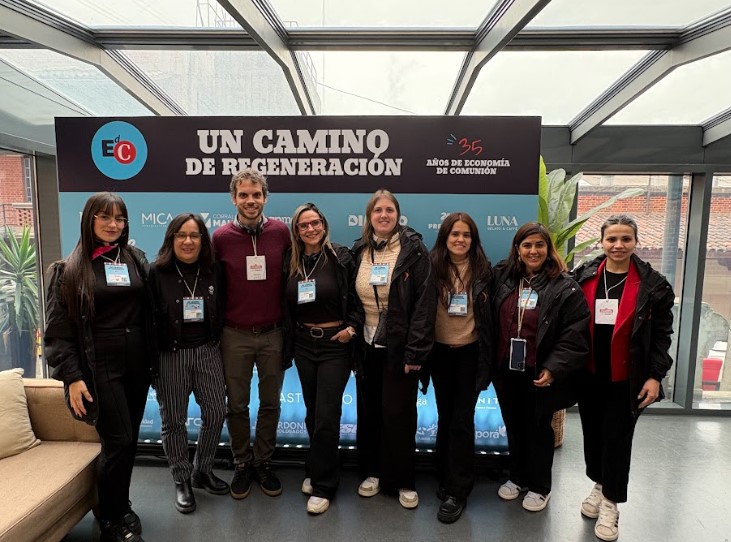
There are events that are not just experienced from an organizational or logistical standpoint. There are gatherings that move you deeply, that make you question once again why we do what we do and where we want to go.
I am Bettina, Director of Boomerang Viajes, and during the final days of May, we had the opportunity to participate in a very special experience: the international gathering for the 35th anniversary of the Economy of Communion (EoC), which brought together 410 entrepreneurs, youth, researchers, social leaders, and community representatives from 38 countries in Argentina.
Participants from various parts of Latin America, Europe, Africa, and Asia were present, including delegations from countries such as Burkina Faso, the Philippines, and Korea.
The richness of the gathering was also reflected in the 13 languages present—a concrete demonstration of the global reach that the Economy of Communion has today, and of its capacity to connect people and organizations from very different contexts around shared values.
What is the Economy of Communion?
The Economy of Communion is a global movement born in 1991 in São Paulo, Brazil, inspired by Chiara Lubich, founder of the Focolare Movement. The initiative emerged in response to the sharp social contrast between the city’s large buildings and the favelas growing around them, with a very concrete question at its core: is it possible to build a more humane, inclusive, and solidary economy?
From that concern, a different proposal for running businesses and generating value was born. Organizations that are part of the Economy of Communion seek to place the person at the center, promoting relationships based on trust, reciprocity, and the common good. It is not just about “donating” a portion of the profits, but about transforming how economy is understood—incorporating communion, fraternity, and people’s care as part of the management model.
Over the years, this network expanded across all five continents. Today, it brings together businesses, cooperatives, social projects, researchers, youth, and communities working to drive economic models with a positive social and environmental impact. Currently, the Economy of Communion coordinates initiatives linked to local development, education, decent work, social entrepreneurship, and regenerative economies.
An International Gathering with a Territorial Perspective
The event celebrating the 35th anniversary of the movement took place between May 25th and 30th, 2026, and featured two very distinct yet complementary stages.
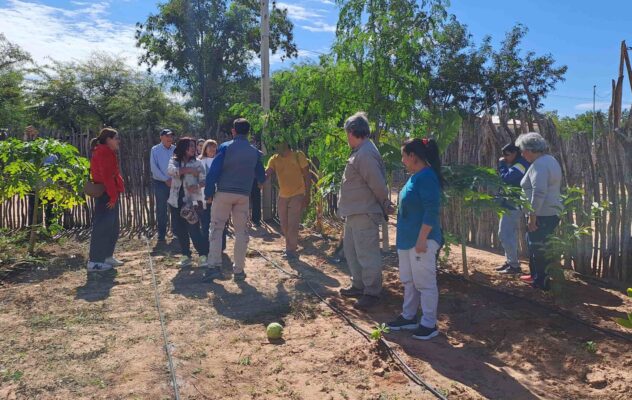
The first stage, from May 25th to 27th, had a very particular format: participants were distributed across 20 local communities in Latin America to live through direct immersion experiences within the territories.
It was not just about visiting projects, but about coexisting, listening, and learning firsthand about initiatives linked to social enterprises, indigenous communities, regenerative agriculture, solidarity tourism, and youth entrepreneurship. There were experiences in various parts of Argentina, as well as activities in countries like Chile and Ecuador.
Through this firsthand experience, participants witnessed how the Economy of Communion translates into concrete actions within real communities facing social, cultural, and environmental challenges.
We are filled with pride to have shared with people from all over the world some of the projects we have been working on for several years:
-
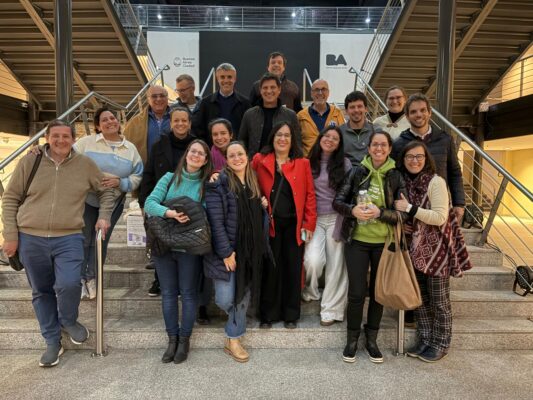
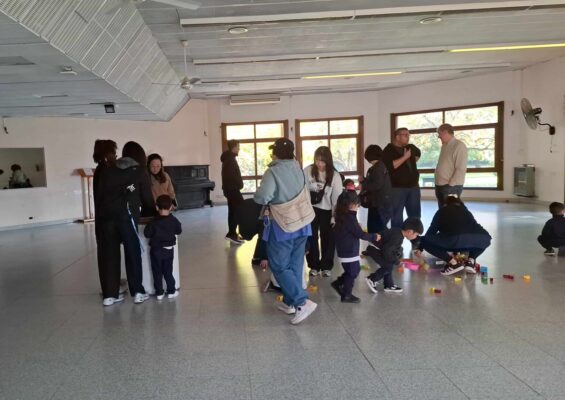
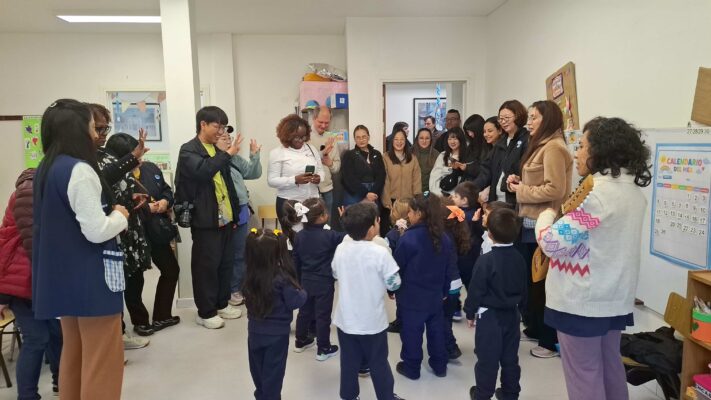
The visit to the Chiara Lubich School, in José C. Paz (Buenos Aires): participants learned about the work of the Fundación Charis Argentina, an organization driven by entrepreneurs and members of the Economy of Communion that supports educational and community projects inspired by the values of communion. The school provides primary and secondary education in a context of high educational vulnerability, promoting a management model that is solidary, transparent, and focused on the development of individuals and the community.
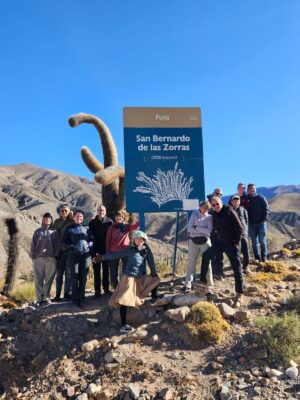
- Solidarity tourism experiences in the Quebrada del Toro (Salta): among mountains and Andean communities, participants shared moments with families from Ingeniero Maury and San Bernardo de las Zorras, learning firsthand about rural life, local culture, and their relationship with the land. The experience included spaces for exchange and learning where the “Economy of Communion” is present in the daily development of community projects that rescue ancestral knowledge, promote collective work, and strengthen local economies from a solidary and sustainable perspective.
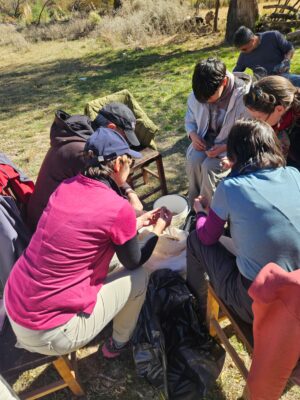
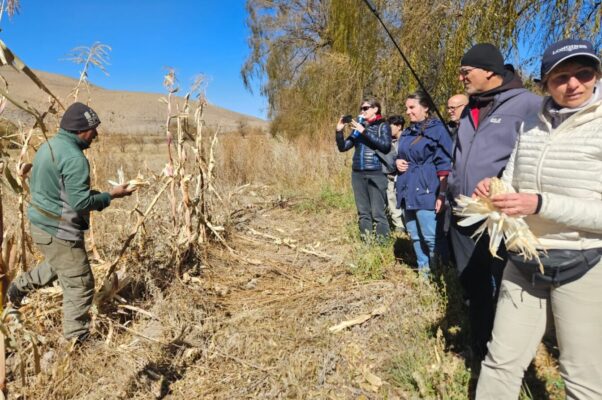
- Encounters with communities and indigenous peoples in Santa María (Catamarca): participants visited community projects where tradition, collective work, and cultural identity combine to generate real opportunities for local development. The experience included spaces such as the Centro Aurora, Apacha, the Tinku Kamayu cooperative, the Musquy Community, and the Pikito Calchaky enterprise—initiatives that rescue ancestral knowledge and demonstrate how the Economy of Communion is lived out on a daily basis, strengthening community networks, promoting decent work, and building a more just and solidary future.
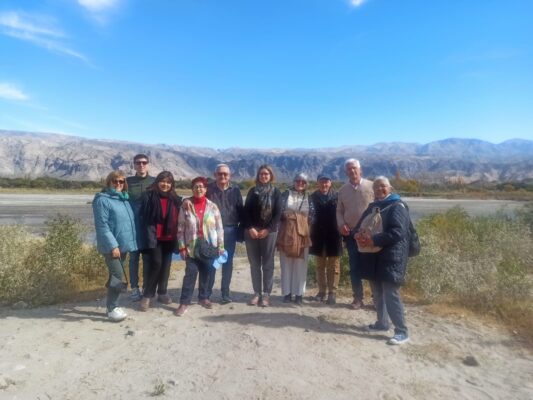
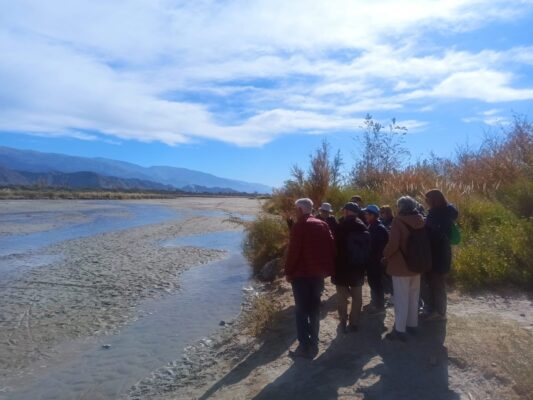
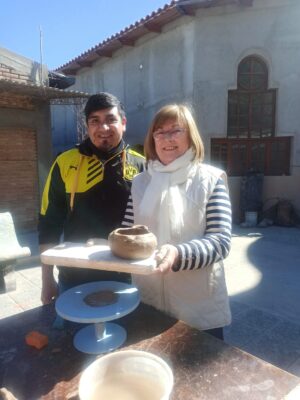
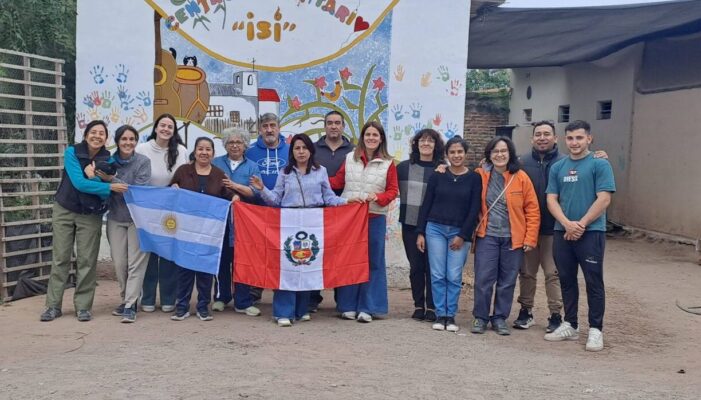
- Community experiences in Fortín Dragones (Salta): in the Chaco region of Salta, participants drew close to projects driven alongside Wichí and Criollo communities, in a territory shaped by social and environmental challenges, but also by a deep cultural and human richness. The experience centered around the “Centro Comunitario Isí” (Isí Community Center), a space that supports families, women, children, and youth from a perspective focused on dignity, reciprocity, and community work.
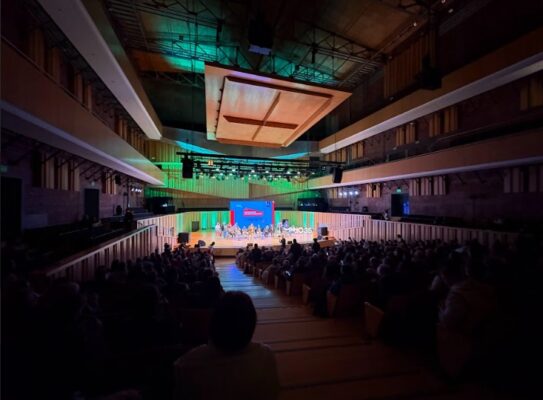
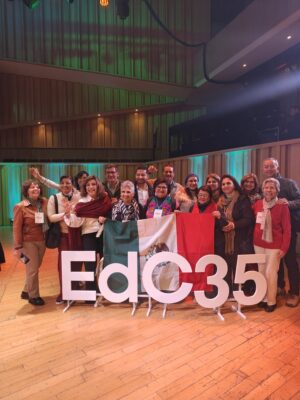
The second stage, held on May 29th and 30th at the Usina del Arte, brought all participants together once again to share their experiences and reflect on the current challenges of a more humane and sustainable economy. Throughout the sessions, topics such as environmental care, purpose-driven entrepreneurship, the inclusion of people in situations of vulnerability, the tensions of the global economy, and the value of indigenous peoples’ voices were addressed. It was also a space to celebrate the 35th anniversary of the Economy of Communion and to collectively envision the next steps for this international network.
The Role of Boomerang Viajes: Much More Than Organizing Trips
At Boomerang Viajes, we had a very important role (and a great challenge) in this international gathering. We were responsible for coordinating a large part of the logistics related to MICE tourism (Meetings, Incentives, Conferences, and Exhibitions), managing travel, tickets, accommodation, and visas for participants arriving from all five continents.
But for us, it was not simply a job. We were born 25 years ago inspired by the values of the Economy of Communion: the idea that traveling can generate a positive impact, strengthen communities, and create genuine human bonds.
That is why participating in this gathering had an emotional component. It was seeing reflected on a global scale a path that, as an agency, we have been building since our very beginning.
When Tourism Connects People and Territories
Something that brought me a lot of enthusiasm about this gathering is the possibility of bringing together very different people, cultures, and realities around the same pursuit.
Participants arrived from different corners of the world—Latin America, Africa, Asia, and Europe—to share experiences, visit communities, learn about local projects, and reflect together on another way of thinking about the economy and development.
That is where I feel tourism takes on a much deeper meaning. Because organizing trips is not just about moving people from one place to another; it is also about building bridges, facilitating encounters, and creating the conditions so that different stories, cultures, and perspectives can connect.
At Boomerang Viajes, we have always held this vision of tourism. And being part of an event like this, where people from different countries come to Argentina to live transformative experiences in local communities, holds a very special value.
A Different Economy Also Needs a Different Way of Traveling
We often talk about sustainability, impact, or responsible tourism as abstract concepts. Gatherings like this show that these ideas can turn into concrete actions.
The Economy of Communion poses a very profound question: is it possible to build a more humane economy? And I believe that part of that answer also appears in the way we travel, in how we connect with the territories, and in the type of experiences we choose to promote.
Because when travel generates an encounter, exchange, and shared value, it stops being just a commute and becomes a true experience of transformation.